Showing posts with label Chrysalids. Show all posts

Thursday, March 22, 2012

Mysterious Larva pt. 2 ~ Silk and Hair

Hey ya'll

I write in with some updates on the "Mysterious Larva" we found on the walkway at Sunway several days ago. 


Well, my suspicions were proven true once again and we opened the container today to find that it had spun for itself a beautiful silken cocoon. Like many other furry lepidoptera, the hairs seem to have been incorporated into the cocoon structure itself.


What did I tell you? Isn't that the cutest looking ball of silk you've ever seen? Meanwhile I really love it how some moths spin cocoons like these! It reminds me of that scene in Godzilla vs. Mothra when the larval Mothra spun a cocoon just like this one alongside the Tokyo tower!!! In the meantime, I suppose there is really nothing left to do but wait!!! The caterpillar/cocoon is rather large so I suppose the adult moth might be pretty huge as well!!! Stay tuned for pictures and updates.

Cheers,
Cyren

Saturday, January 21, 2012

Lime Swallowtail / Papilio demoleus


Hey ya'll

Just a quickie! Thought this would make a lovely picture of one of the butterflies I'm more accustomed to raising! In the meantime I've never been busier (being a virtual maid to the holidays) as there is just so much to do. Chinese New Year really is a lot of work!!! What with the house cleaning and the customary visits and all that. Phew! Since when did holidays become such a workout.

Meanwhile~ Gong hei fatt choy everybody!!!!

Monday, January 9, 2012

Swallowtails and their Food Plants


Hey ya'll 

It is general knowledge, that the caterpillars of each butterfly species will generally only feast on the leaves of specific host plants, but while the host plants of each lepidoptera species may indeed be as varied as the actual number of flora there are in the world, it does not escape my notice that many butterflies from within the same family actually share similar, if not same, larval food plants as one another. Many of the black bodied swallowtails that I have been raising for some time now, for instance, feed on various species of rutaceae (citrus) plants. Indeed this was something I discovered through something of an accident when a batch of Papilio demoleus (lime butterfly) eggs I was raising hatched a handful of Papilio polytes (common mormon butterfly) larvae as well, which led me to speculate that some wild common mormon female must have deposited her eggs upon the same host plant as the lime butterfly. Indeed, over the years I have experimented on various swallowtail larvae and found out that a large majority of Malaysian butterflies from the family papilio will indeed feed on rutacea, even though their eggs were originally deposited on host plants of other origins. Below are a list of some of the swallowtails I have raised which feed on such:

Lime butterfly (Papilio demoleus)
Common mormon (Papilio polytes)
Great mormon (Papilio memnon)
Red Helen (Papilio helenus)
Great Helen (Papilio iswara)

Needless to say this makes it easier for me to breed these insects as citrus plants are relatively easy to obtain in our country and similarly easy to cultivate. As it stands, I have about ten healthy citrus trees growing in the front yard today which is a reassurance that I will never run out of food for the voracious little larvae! 

Newly eclosed red helen swallowtail (Papilio helenus)
Red helen swallowtail (Papilio helenus) with Common mormon male (Papilio polytes)
As a contemplative end-note, though, I wonder if this is any indication that many of these butterfly species do indeed share a common ancestor, the most basic form of papilio which fed on rutaceae that then diversified as its members spread across various locales and regions across the globe. As I have not much intellectual background on such matters, I can only speculate for now and hope that some day I will come across in my musings, some piece of information that would shed light on the subject as such.

Meanwhile, Term is starting soon which means my first day as a university teacher looms ever closer. Having not yet received even the syllabus for the semester, I am more than a little apprehensive although part of me likes to be optimistic and think... well, I've done all of these subjects before, and aced them with flying colours... how bad could it be? Wish me luck everyone!

ps. Ray will be leaving China today for Sibu, which is in East Malaysia. I heard there's been floods so I hope it won't be too much of an inconvenience.

Cheers,
Cyren.

Sunday, January 8, 2012

The Yam Hawk Moth (theretra nessus)

Hey ya'll

Just getting things out of the way, I wanted to upload pictures of this very impressive and large hawk moth I found resting over the door to my house a couple of months back.


I've identified it as the Yam hawk moth (theretra nessus) with a little help from my friends but I must say that I  know little to nothing else about the insect's life history. Perhaps with a little more time and research I can find out more on this beautiful moth. 
Anyway, I hope 2012 has been treating everyone well. For me things could not have been more stagnant which is perhaps the unfortunate stage during those in-between moments in everyone's lives. Pupae moments, I like to call them, for they remind me of nothing more than the inactive pupation stage of many insects that go through complete metamorphosis.

Speaking of complete metamorphosis, it is quite unfortunate that almost all my caterpillars seem to be afflicted with a particular ailment that makes them pupate improperly (they fall off the cremaster during pupation which causes them to become deformed) and many more do not make it even to the pupation stage, seemingly shriveling inside their old skins as they attempt to molt. Any entomologists out there able to enlighten me on what's going on here??? 

cheers, 
Cyren

Thursday, December 8, 2011

Sleeping Beauties

Assorted Swallowtail pupae.
Three more caterpillars pupated today, all within minutes of each other which means that I will probably receive all the adults at the same time as well. This batch truly surprised me somewhat because while I was expecting them to be larvae of the common mormon butterfly (Papilio polytes) it seems, from the shape of their pupae (they have less pronounced 'horns' at the front and their bodies are more tapered, as opposed to the angular pupae of the common mormon) that these will turn into lime swallowtails instead (Papilio demoleus), another somewhat common though equally beautiful species. The amazing thing, I think, about the lime swallowtail is the way its almost white spots on the dorsal portion of its wings gradually yellow as the butterfly ages, sometimes even turning to orange before an aged individual dies! Of course, not many butterflies survive to such ripe old ages in the wild, least of all the lime swallowtail which does not possess chemical defenses against birds and the like. But as I have said, such is nature! Anyway, many of the butterflies have eclosed already, most have been released although in retrospect I should have probably kept some of the birdwings because there is a demand for them right now. Sigh, you know the day you get rid of something you're going to need it tomorrow. That's my philosophy! ...but maybe that's also why I'm slightly disposophobic.

Empty birdwing pupae. I like to keep the shells sometimes because they remind me of what used to be. :P

Monday, December 5, 2011

Why did they name a butterfly after the Mormon sect?

Hey ya'll!

It seems this week is a great time for butterfly-births! Today saw the eclosure of the adults of one of my first batch of swallowtail caterpillar, the common mormon (Papilio polytes).


While it is a rather common butterfly in most south and southeast asian gardens, the common mormon butterfly derived its peculiar name from the mormon sect of America. This is a reflection of the act of polygamy (multiple spouses) which is practiced by this sect as the females of the mormon butterflies (of which Papilio polytes is but one) have multiple forms leading early naturalists to observe that the uniform male butterfly appeared to copulate with multiple diverse females.

interesting, isn't it?

Cheers,
Cyren.

Saturday, December 3, 2011

Autumn Leaf Butterfly (Doleschallia bisaltide)


It's amazing how many ways evolution has made various animals resemble dead leaves.

Hey ya'll 

Also known as the Autumn leaf butterfly (for its obvious resemblance to a small, dried leaf, Doleschallia bisaltide is a medium sized butterfly associated with the charaxinae group of butterflies that are known for their zipping and strong flight. Although I have encountered many of these butterflies in the wild (they are easily attracted by leaving out rotting and fermenting fruit on the forest floor) I must say this is the first time I've had the joy of raising one in captivity, although... to use the word "raising" would be a little bit far-fetched considering how I actually found this lovely creature as a pupa hanging from a birds-nest fern (strange, considering the larvae feed on the plant of the acanthacea genus). Eitherway, the pupa suffered several dents in its abdominal region and I was worried as to whether the butterfly would have survived or not. Apparently they are as much troopers in the dormant stage of their lives as they are as adults (it's near impossible to catch one of these butterflies and even when one has gotten a hold of them in one's fingers, the flight muscles are so strong that they are sometimes able to slip free with one strong burst of energy) because earlier this morning, a healthy and strong butterfly was born. 


All in all, Doleschallia bisaltide is a rather attractive species of butterfly, the uppersides of its wings boast striking hues of orange and yellow, set against a background of deep black. But really, it is the underside of the butterfly's wings which are most interesting (in my opinion) as they resemble dried leaves rather closely, punctuated only perhaps by the two ocelli on its lower wing. In fact, the patterns on the underside of this particular species of butterflies is so variable that it is said by many lepidopterists that no two specimens are ever alike in this regard which is something I can attest to from my experiences alone. 


Anyway, I am also awaiting the birth of several babies right now, the eggs of the Malayan Zebra (Graphium delessertii), and I am hoping that their turning a deep shade of brown is more a sign that the time for their arrival is near as opposed to death by fungal infection. Wish us luck!

Cheers,
Cyren.

Baby don't you know that everybody watches, every time that you take flight. They're blinded by your light.

Tuesday, October 25, 2011

The Other Birdwing Girl

Hey ya'll

Allow me to introduce to you, Helena!


This magnificent looking creature is Troides helena or Helena's birdwing... don't ask me why it is named so but it might interest you as a matter of fact, that many of these large butterflies were named after women of great stature Queen Alexandra's birdwing (Ornithoptera alexandrae) for example, or Queen Victoria's birdwing (Ornithoptera victorae) so I suppose it might be logical to assume that Helena, too, was named in reference to a lady of royal birth... Helen of Troy? Or... perhaps just some madly-in-love entomologist wishing to name a newly discovered species after his True Love. Either way, it is a rather befitting name for such a beautiful insect and although I missed filming her birth and the expansion of her wings - I recently discovered this video editing tool which will allow me to speed up the process so that all of you back home will get to watch her wings expand in 2 minutes instead of the customary 30 - I will still have the utmost enjoyment of releasing her tomorrow with Ray at the same forested spot where I released the Golden birdwing (Troides amphrysus) earlier this week as well as where I've spotted other individuals of her kind. Also, for releasing a butterfly into the wild, I get to make a wish (Native American legend has it that wishes have a higher chance of being granted if whispered into the ears *they really DO have ears, you know* - of a to-be-released butterfly)

Oh, and are we all loving the new haircut? I haven't had hair this short... or this uninventive since high school. I suspect my stylist Andrew was being lazy that day...but oh well, he DID promise me a dye job... I wonder what color I should go for this time round? What do you think? Hit me up.  

Saturday, October 22, 2011

Birth of a Birdwing Butterfly

Hey ya'll

Newly emerged Golden birdwing butterfly (Troides amphrysus ruficollis)
I'm sure most of you will recall the pupae I have acquired from a few posts back and how excited I was at obtaining the pupa of one of the birdwing butterflies (some of the largest and most majestic butterflies in the world!) ... well, just yesterday I was blessed with the immense pleasure of having been able to witness the emergence of one first hand, with my very own eyes. It wasn't my pupa, to be honest, but the one I had given to Ray (upon his request) but when he told me that it had begun to turn "gray" and that the shell was turninelyg "transparent" on the top I just knew the butterfly was going to emerge. Incessantly I begged, and pleaded, and whined.

"Pleeeeaaaase!!!! Pleeeeeeeeeeaaaaase can I have it?" He was not convinced.

"I will be able to wake up extremely early, set my camera up on a tripod... film the whole thing!!!" I argued my case.

"I will wake up, I swear!!! I'll wake up at 7am. Not too early, you know... just, like I always do with all of my butterflies." I liked being there, being the first thing they saw when the entered the new world.

"Would you wake up early to film the entire thing for me? ... what if you have to go off for class halfway? I can't miss it! I know I have three more at home but there's no guarantee that I will be present at their emergence... I need to film this one...Pleeeeeeassse, please please please please please, Pleeeeeeeeeasssse!!!"
eventually, he relented (I can be quite a mosquito when I choose to be) and despite the horrid weather, consented to go up to the eleventh floor of his apartment to fetch the incubating creature for me.

"Make sure you film the whole thing!"
he said. And so off I went, at 10.00pm at night, a graying, transparent pupa cupped protectively within my hands.

I set the camera up and went to bed promptly that night. Seven o' clock in the morning, I told myself. Seven, I will get up and I will film the entire thing and when my alarm jolted me out of my slumber - I was having a particularly pleasant dream involving butterflies as large as aeroplanes - I wasted almost no time in emerging from my own chrysalis of sheets and comforters to wait it out by the now fully transparent butterfly chrysalis. It's always a most taxing experience, the waiting, and when the butterfly still objected to the idea of waking up so early in the morning, I finally let myself grab a towel and shuffle my way to the showers for a quick bath. Turns out, the words "quick" and "bath" do not fit properly into the same sentence with me and by the time I had finished my rendition of Can't Fight This Feeling and Somewhere Only We Know (rather hoarse and off-key, I'm afraid, as I have had the misfortune of loosing my voice this past week) I realized that it had been almost an hour. OH NO!!! THE BUTTERFLY! And I unceremoniously reached for my towel, barely tied it around my waist and sprinted all the way back to the room. As fate would have it, the butterfly chose that exact moment for its debut into a new life and whether by imagination or not, a loud and distinctive cracking sound told me that it was ready.

Fwoooooosh I went, the towel fell, but I had made it just in time. The butterfly was starting to pop the lid of its chrysalis and I had made it just in time to film the entire process. Not even bothering to dress up, I pulled on a pair of shorts and settled down to watch the slow and yet beautiful process. I also snapped a few photographs while I was at it.


Belatedly I realized that I was still largely under-dressed during all of this (and that my reflection was visible from the glass-sides of my chrysalis cage) but upon checking the video, discovered to my relief that exposure was decent, if not entirely minimal and I won't even bother pointing things out to you, I think, because it makes it even harder to spot. At any rate, I daresay I had shorts on. The video will be uploaded later, I think, as a separate post when I'm done figuring out how I can possibly get about editing it now that my Windows Live Movie Maker has been deleted during the laptop reformat... bummer.

Ignore the background mess, please, and also my lop-sided eyes
ps. In case some of you were wondering what we did with the butterfly, well Ray and I just released it near a forest where I've seen the other birdwing butterfly species (Troides helena) before. Although there are no females so it may not be able to breed, here's to hoping that it will live out the three weeks of its life with much pomp and majesty. 

Sunday, October 16, 2011

Butterfly E.R ~ performing a butterfly wing-transplant

Hey ya'll

There are those moments in nature when a apparently healthy chrysalis will inadvertently produce a deformed butterfly, but while these insects generally do not survive, were they to be left to their own devices in the wild, I do believe that there are some things I can do for my babies to give them just that little bit of a chance (however small it may be) of survival upon release in the wild. Note, this is NOT something most vets, much less an arts student would know how to do. I call it "wing-transplants" and it is just one of the weird and outrageous things one picks up after dabbling so long in the arts of butterfly collecting. Under most normal circumstances, such a procedure seems hardly worth attempting. Deformed butterflies are usually problematic in terms of their health and are possibly too weak to survive anyway (a quick trip to the freezer might end it painlessly for them or, if you like, allow Nature to take Her course and place your deformity out in the garden...alternatively you may choose to raise it in captivity but there are some butterflies which object strongly to that and may not feed). Eitherway, if you happen to have extra specimens to spare and an extremely steady hand, you may wish to attempt this.

Step 1. Sedating the butterfly. Sedating the butterfly is not as easy as it seems but one of the best ways to get a butterfly to remain still is by placing it in a cold environment. Not too cold, you understand for that would most certainly kill it, but cold enough anyway for it to become inactive. It takes many trials but I discover about ten to fifteen minutes in the refrigerator at low setting should do this. (conversely if this is your first time you might wish to check back every few minutes or so to make sure you didn't kill it.) If you're not sure if the butterfly is sufficiently sedated, put your hand into its container and nudge it with your fingers. A sedated butterfly will not flutter. Otherwise, it may wave it's antennae at you, feebly, in apprehension, I suppose. If your butterfly flops over on it's side and it's body feels hard, chances are you left it in there for too long and have already kill it. Oh well..

Step 2. Restraining your patient. Assuming that you have not accidentally killed your patient, take it out gently and place it on a surface in a dark and cold room (I usually keep my air-conditioning to a 16 degrees for this) This avoids it getting restless. It is imperative once you remove the butterfly that you begin immediately. Time is of the essence and if the butterfly struggles too much during the procedure, you may accidentally end up killing it! Yeah... I know... so many ways to kill a butterfly, but since when was surgery risk-free anyway? Anyway to restrain you butterfly place weights on either sides of its wings. For larger butterflies I use the handle-end of a pair of opened scissors (simply slot the wings under each handle) but for smaller ones, erasers would do.

Step 3. Remove the deformed portion of the wing. Okay, now here's where it gets graphic and I suppose you might want to stop reading now if you're averse to these kind of things... or not... it's really all the same to me. So yes, remove the deformed/damaged portions of the wing with a very sharp blade. Be careful, not to remove too much (spare as much of an undamaged wing-base as you can!) and only do it one at a time. It is imperative that this is done one at a time. If, for whatever reason, both front and hind wings are deformed, I usually start with the front first. Makes it easier somehow.

Step 4. Attach the surrogate wing. From a dead butterfly of roughly the same size as your patient, remove the wings that are needed. Clip them as close to the base as you can without including the portion of wing that is attached to the body. The important part is, quite simply the strong, radiating vein on the butterfly's wing. Using a very thin brush (such as those for nail art) dab a very thin layer of clear polish (or some other waterproofed adhesive) onto the remaining wing base of your butterfly patient. Not too much, you understand, or the wing would be to heavy to flap, a thin layer would work just fine. Carefully, with rubber-tipped forceps, pick up the surrogate wing and stick it firmly to the wing base. Press them firmly together with the forceps.

Step 5. Repeat the procedure with the other wings. It is imperative that you do this one wing at a time. That way, should the butterfly show signs of rousing from its temperature induced slumber anytime during the procedure, you may move the patient back into the sedating chamber (a.k.a refrigerator) for another five minutes or so before going again. Be very careful about the adhesive you use as they could cause the butterfly's wings to stick together by accident or even suffocate the poor insect if you managed to somehow get some on it's abdomen. To avoid this I suggest dusting the transplant sites lightly with flour (it looks rather unsightly, I know but it prevents accidents, and that's what counts!) Let the butterfly dry by placing it back into the fridge for another five minutes. When that is done, take it outside into the sun so that it may warm up and feed it a sugary solution to give it back it's strength.

Step 6. Release. If you have done the process well, and if the butterfly was not already too weak to begin with, you will have a perfectly capable butterfly (albeit with oddly matching wings) fluttering clumsily about your garden for the next few days of its life.

Anyway, here's a picture of one of my recent patients. She, unlike her sister, did not have the strength to pump enough hemolymph into her wings upon emerging. You might have seen their chrysalids in yesterday's post.


Butterfly, before and after surgery shots. 1. Emerged last night but wing never expanded.  2. Butterfly fresh out of surgery. 3. Butterfly resting on foliage feeding on a drop of sugared water while the sun powered its flight muscles.
Pleased to inform you all that this patient made it. She fluttered away, promptly, after her sister who was also released today into the forest and I'm sincerely hoping that she will live to fly, fight and breed another day.

Saturday, October 15, 2011

The Butterfly House is Back in Business!!!

Hey ya'll!!!

So I know this blog started out as a sort of field journal to my butterfly breeding habits but then those sort of posts sort of died out to my butterfly collecting past time (and other matters) but that was mainly because - following the large and untimely demise of a huge batch of swallowtail butterflies I had been raising (Papilio demoleus, Papilio polytes and Papilio Memnon) at the hands of the dreaded parasitic wasps, I've never quite had the mood nor time to raise anymore. However, closing the completion date of my thesis and my timely departure from the University for (hopefully) more blossoming fields, I have manage to kick start the Butterfly House again - this time housing pupa of various kinds of local species.

Live butterfly and moth pupae in the hatching chamber (I put them in here because the transparent walls make for easier observation!)
Some of the pride and joy of the butterfly house currently are (including, of course, the one I received from my anonymous benefactor some days back) a handful of large papilionidae pupae which I believe may either birth a Common (Troides helena) or Rajah Brooke's (Trogonoptera brookiana albescens) birdwing butterfly. Here they are, of the green variety. I've actually got for but one of them now hangs from a little basket in Ray's bedroom so that he, too, may witness the miracle of Birth.


Other butterfly pupae include those of the striped crow (Euploea mulciber) which are colored a most brilliant shade of gold and silver (possibly to deter predators by reflecting lights harshly into their eyes or by passing off as large dewdrops *indeed that was what first came to his mind when Ray spotted them*)


(latest update, 12.51am) These actually hatched, just now and I have two crow butterflies hanging from their branches, drying their wings in my tank. It's strange, really, because butterflies do not normally hatch out at night... or is this a possible exception to the species? I do not know... I believe one may be crippled, however because unlike the other butterfly (whose wings have fully spread) one still remains shriveled and decrepit on one side.


The other lepidopteran pupa I got were two atlas moth pupae I found dangling of rambutan trees. Perhaps I shall be able to mate them and produce more? Speaking of production, I've got several larvae on the way too, two, in particular who seem on verge of forming their chrysalids. They are of papillionidae and I believe may either be the great mormon (Papilio Memnon) or red helen (Papilio Helenus)

Tuesday, October 11, 2011

Will my anonymous benefactor please stand up?

Hey ya'll

As a rather annoying start for the day, I was gratuitously shaken from my slumber an hour and a half ahead of schedule by my alarm which (in my computer-screen-induced-blindness) I had accidentally set last night, or rather earlier that morning but just when I had peeled myself off the double comforter sheets, taken care of the usual morning necessities and dragged myself to the office, I was greeted by a rather strange message requesting I make my way to one of the other buildings at our university for there was a package awaiting my collection there. Strange, I thought at first, for I knew not anyone from that particular faculty nor was I expecting to receive anything. I was almost quite content to stay in my office anyway and ignore the summons, figuring perhaps that they sent it to the wrong person, when curiosity eventually got the better of me. Picking up the package from the receptionist and opening it, I see that it was most certainly worth the five minute walk! I was jolted awake quite instantly and, despite the obvious lack of sleep I couldn't have felt more awake than I did at that moment. Inside the package, wrapped neatly in sheets of tracing paper were five different butterfly specimens, all dead and dried and in a single tupper-ware, a live papillionidae pupa.

The parcel
An assortment (in no particular order) of papered butterfly specimens
And one live papillionidae pupa. It's like a lottery! I wonder what will hatch from this gigantic chrysalis?
In short, a visiting professor had learnt, by chance, of my fascination for "these most beautiful creatures" and hoped that she could help "fuel [my] enthusiasm" by donating some butterflies from her own personal collection as she would be returning to the UK, soon. It was a pity, though, for she hadn't left her name and/or contact details for me to reach her.

My dearest benefactor,

Whoever you are, I most certainly hope that you are aware of my blog as well and are reading this as I would like to take this opportunity to express my utmost thanks and sincerest gratitude for what I consider a most amazing and priceless gift. Believe me, the specimens are more than, as you have said "mediocre" and I am very certain these will be most appreciated.

with best of regards and sincerest gratitude,
Cyren.

Thursday, September 8, 2011

Nymphamania!!! No, not the sexual kind.

Hey ya'll

It's been quite a week lately and despite a small bout of fatigue and continence I have recovered almost fully, up and about and ready to do - among other things - some work! I regret to report though that despite the early accomplishment of completing the Marilyn Monroe essay, I've not yet had much success with the second chapter of my thesis - indeed, I am stuck somewhere between conceptualizing and beginning - but if it is any consolation to myself, I do suppose I may be considered as a fast worker. Once I actually get started on this thing, it shouldn't be two or three days before I finish the note-form draft to be viewed by my supervisor - whom I am very tempted right now to approach for an application for extended submission deadline! However, work aside, one of the other ups of having gotten back my health at this juncture is my ability to explore the natural once more! Of course the world waits for no person and I had been pining for days, the things I must've missed out in the forest and other parks when I was too preoccupied by remaining indisposed in bed. Some of the more drastic changes would have been man made I suppose and I returned to my usual spot to discover the weed patch - of which I had written so fondly about two posts back - had been summarily cleared out. One of the cleaners noticed me staring ruefully at the carnage left before his shears and asked me if there was a problem. I promptly told him about the caterpillars I had come to observe and their pupae and he started explaining how he was just following orders. I did not blame him though, and he was very apologetic about it, and I told him so but in a fit of apology he rummaged inside one of his sacks - the ones where cut leaves are thrown into - and produced a larvae and offered it to me. I declined, "Thank you, but no." I told him. "It is still too small, and I would have nothing to feed it with." I did, however, managed to rescue two beautiful chrysalids which now sit on the office table - captivating a group of my office mates who no doubt cannot wait to witness the transformation from pupae to butterfly themselves.

Lone survivors. My two Tawny Coster (acraea terpsicore) pupae
But on a separate note there is the haze, which is only growing thicker by the day... and more suffocatingly so!  Really, I wonder what is it about this time of year that always seems to bring haze to our country... it's horrible and even a few minutes of walking outside is enough to make one wish one were back indoors. Nature, however seems to be countering the dull gloominess of the haze with Her own attempts at injecting color and it seems the forest - now definitely on it's last leg (for it is but a week before she is torn down) has been in full bloom. It almost seems like it knows its time is up and is therefore rushing to disperse it's progeny! The mixed fragrance of flowers and fruits so strong that even the haze cannot block out completely seem to be attracting out of their hiding spaces tons of insects, butterflies and birds who will no doubt disperse the seeds to further locations. For the better part I was content to leave them at it. It is extremely fascinating how nature on Her own seems to possess this will to survive... then again, which living being doesn't? Either way, I would not hinder the process and took my collecting - and observing - self elsewhere. Which is good, because it gives me the opportunity to scout out a lot more different habitats as well. And so many things I have learnt. For example, upon taking a walk to the park below my house (I needed something to calm me down after the blood test ... I HATE NEEDLES!) I discovered a wide variety of butterflies, many of which I had no idea flew in this area. I netted a few of them (with MUCH exertion considering my low platelet count!) but only one of each species (there was no need to be greedy!) and here they are.

The four beauties
The first butterfly of today was this Glassy Yellow Tiger (Parantica Aspasia) which was extremely beautiful in the way the sunlight shone through the transparent patches of its wings. The butterfly was easy to catch, possessing a floating, lazy sort of flight and there were several of them high up in the trees. 

The Crow butterflies were also rather numerous and plentiful and I managed to catch two of them. I can identify this one quite surely as the Striped Blue Crow (Euploea Mulciber) and the other - somewhat reservedly - as the Common Crow (Euploea Core). An interesting fact about these crow butterflies such as the Common Crow is that they possess leathery wings and tough bodies, capable of withstanding most predators! When attacked, rather than simply running away, the butterflies ooze a vomit inducing liquid which causes predators to instantly release them. Upon the release the butterfly continues to fake it's death until the predator leaves. The butterfly than 'miraculously' returns from the dead and promptly flutters away!
Last but not least, this magnificent and large butterfly. This butterfly with its large size, white spots, and tailed hindwings are often mistaken in flight for the Red Helen Swallowtail (Papilio Helenus) but what it actually is, is a member of the Satyrinae sub-group of butterflies called the Malayan Owl (Neorina Lowii Latipicta). Satyrinae generally prefer to fly in shaded areas and although are mostly day flying, tend to show aversion towards the sun. It was a wonder one as beautiful as this would deign to appear before me on such a hot day as today!
Now finally, one last snippet of fun filled trivia before I leave... you will notice, perhaps the rather strange lettering of the word "Nymphomania" in my title... but rather than a spelling error, it was a deliberate play on the butterflies' sub-species. Now, if you had caught one of these butterflies (and indeed I regret now for not taking a closer shot of their bodies for you) that they possess only four legs. Four, instead of the insect customary of six. And while many first time observers have come to remark upon astonishment that the butterfly had somehow got one pair of it's legs detached, this is actually something which is quite natural. These butterflies, the two danaidae (the crows and tiger) and the satyrinae are both members of the nymphalidae butterflies, sometimes also called brush-footed or four legged butterflies. And this is quite simply because - for whatever reason - the species have evolved to grow reduced pairs of front-legs (resembling small brushes) with only four of their remaining legs visible upon observation. Indeed, I could probably go on and on about butterflies, but work is calling and I would be wise to use what small ammount of strength I have left to get some of it done. Till next time, my readers.

Saturday, August 27, 2011

Construction, displacement and species biasness.

Hey ya'll

more construction in the university grounds... which is fortunate for students, because they will no doubt be getting awesomer and awesomer facilities (although, I have this theory that students will never be completely satisfied with their Alma Maters until they have left them permanently... perhaps not even then) but is mostly unfortunate for the wildlife that have begun to call this place their home. It was amazing enough that I managed to find fireflies on campus grounds awhile ago (there's a large man-made lake nearby) but it seems that they too, like a particularly ghost-like barn owl I caught swooping over the carpark some warm nights, have left this land for greener pastures. A pity, really, as I would have loved to observe them further and to greater detail. However, I suppose the ability to adapt is one of nature's key deciding factors in the evolutionary arms race for survival, and creatures that have grown, or can efficiently grow, accustomed to mankind's modification of the living world are the ones who - like us - can continue to thrive. Take these guys, for example - the tawny coster butterfly (acraea terpsicore) of the heliconia family. They not only have seemed to survive the leveling of the many groves surrounding the area which they call their home, they seemed to  have continued to thrive! I attribute this mostly to the diversity of the larvae's diet (they will consume a wide variety of passiflora vines which - fortunately - grow quite opportunistically as weeds in great abundance in urban settings. And it is this tenacity that I admire in some species but not in ours. Hmmm... species biasness I suppose. What's up with that?

Tawny Coster pupa on wire-mesh fence. 

Saturday, June 4, 2011

Butterfly Hatching Sequence

12.00am, 6/3/2011
The brown coloration is a natural defense mechanism. Caterpillars that pupate near twigs or pieces of wood tend to develop similar coloration
12.40am 6/4/2011-
First signs of eclosure. The chrysalis turns darker in colour and the butterfly is almost fully visible (2nd from right)
10.00am, 6/4/2011
The chrysalis has grown to be fully transparent by now and the wings are fully visible. It won't be long...
10.30am 6/4/2011
Emergence
10.45am, 6/4/2011
Butterfly climbed to higher ground to promote the transference of hemolymph into the wings.

There's nothing in a caterpillar that tells you that it's going to become a butterfly

Wednesday, June 1, 2011

Defense Mechanism


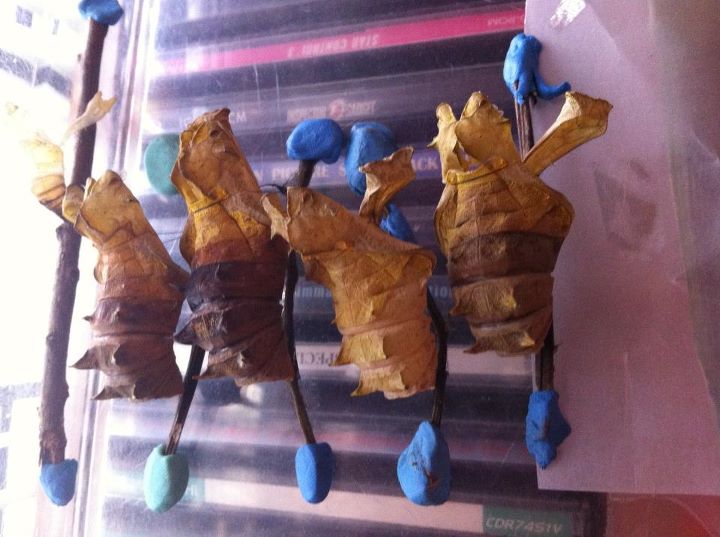
There's something about swallowtail chrysalids that always strike my fancy. When pupating near green vegetation and plants, the chrysalis takes on a bright green colour that it may blend in better with the leaves in its vicinity. However when near objects like wooded sticks and twigs, they will take on a dark brown colouration complete with pigmentation to mimic lichen and moss on rotting wood. Now, since its commonly known that caterpillars have poor vision... i wonder what is it that triggers this particular form of defense mechanism. Speaking about swallowtail pupae, 8 of them have gone up so far 6 of which (as you see in the picture) had to be re-located due to the caterpillars choosing inconvenient spots for pupation (like the door to the enclosure for example which greatly inconvenience my cleaning and feeding responsibilities). I just hope they can/will develop properly and just as well without the characteristic papillionidae silken girdle!!! Will post updates as they come by. TTFN~ Tata for now!!!

Fighting is inevitable sometimes, I suppose. I just wish it doesn't have to be so bad >.< 

Tuesday, May 31, 2011

Hang in There!!!

So besides Mutie and the Black-Pupa, it seems all my other cats are pupating very beautifully!!! I think they even appreciate the "natural" setup I've made for them involving natural branches and twigs collected from around and about the University.


There is nothing in a caterpillar that tells you its going to be a butterfly.